SWS Academic Research eLibraryEarth & Planetary Sciences

Browse

Search Results

Now showing 1 - 5 of 5

Author publications

Adrian-Aristide Asimopolos

5 linked publication records

Author: Adrian-Aristide AsimopolosSubject: Space Technologies and Planetary Scienceclear all
Showing 1-5 of 5 records
1
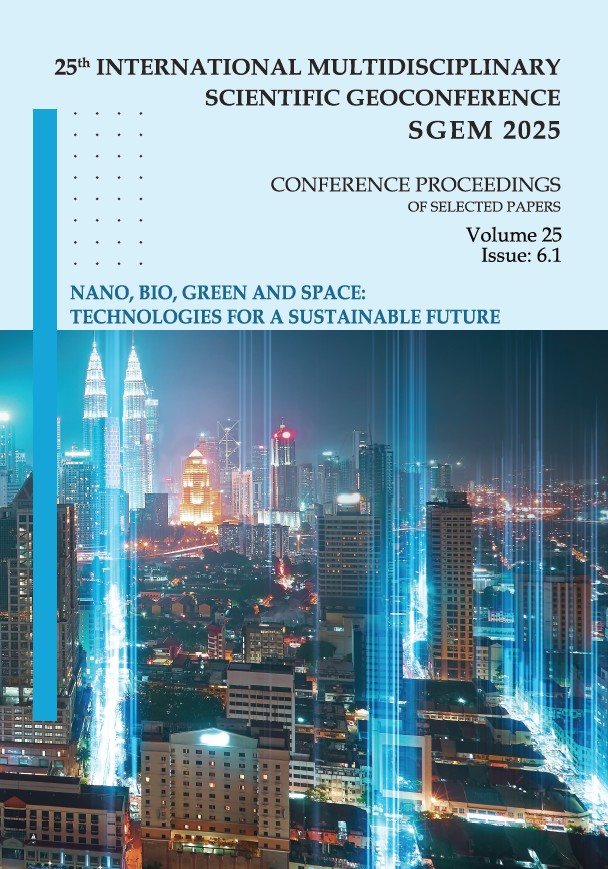
25th International Multidisciplinary Scientific GeoConference Proceedings SGEM 2025, Nano, Bio, Green, and Space Technologies for a Sustainable Future, Vol25, Issue 6.1
Publication

CONSIDERATIONS REGARDING THE EVALUATION OF THE VARIABILITY OF THE GEOMAGNETIC FIELD.

(STEF92 Technology, 2025-08-15, Asimopolos Laurenţiu, Adrian-Aristide Asimopolos, Natalia-Silvia Asimopolos)

Show more

The geomagnetic field varies in time and space, being a signal composed of periodic and non-periodic elements and is monitored in a tri-axial system within the geomagnetic observatories of the INTERMAGNET network across the planet. In the work, based on these data, we use for spectral evaluation (Fourier, wavelet, signal decompositions in approximations and details with various functions on different levels, etc.) in order to analyze different geomagnetic phenomena (such as: geomagnetic storms, disturbances, etc.)...

Space Technologies and Planetary Science2025
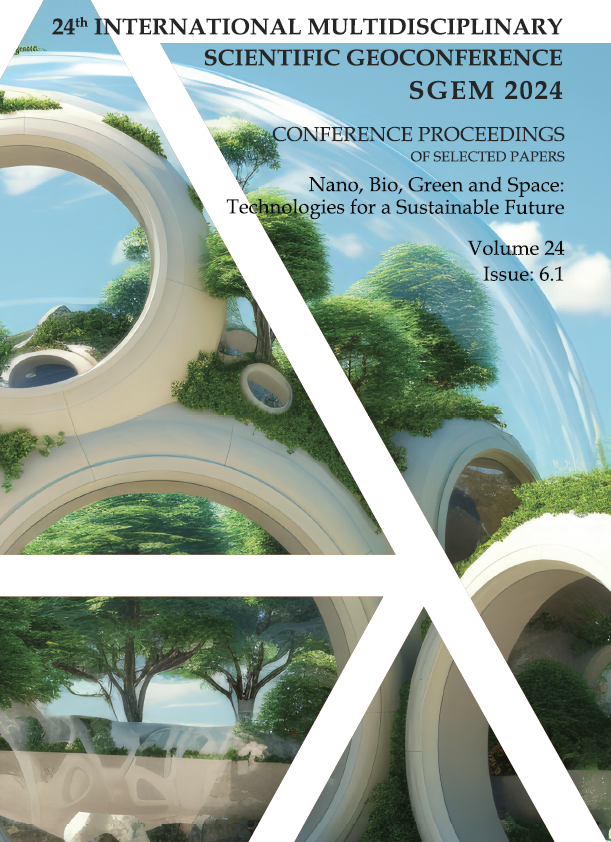
24th International Multidisciplinary Scientific GeoConference Proceedings SGEM 2024, Nano, Bio, Green and Space: Technologies for Sustainable Future, Vol 24, Issue 6.1
Publication

ANALYSIS OF GEOMAGNETIC DATABASES IMPACTING SPACE WEATHER

(STEF92 Technology, 2024-11-01, Laurențiu Asimopolos, Natalia-Silvia Asimopolos, Vijdea Anca-Marina, Dinu Luminita, Adrian-Aristide Asimopolos)

Show more

Through the complex analysis of the geomagnetic database of the Surlari Geomagnetic Observatory for over 80 years, corroborated with the data of other planetary observatories from the INTERMAGNET network, we have extracted the geomagnetic information that is correlated with the specific physical parameters of space weather domain. Space weather refers to the conditions and phenomena occurring in outer space that can influence the near-Earth space environment. This concept includes a variety of events and condition...

Space Technologies and Planetary Science2024
SGEM International Multidisciplinary Scientific GeoConference- EXPO Proceedings; 22nd SGEM International Multidisciplinary Scientific GeoConference Proceedings 2022
Publication

COMPARATIVE AND SPECTRAL STUDIES BETWEEN GEOMAGNETIC SERIES RECORDED IN INTERMAGNET OBSERVATORIES

(STEF92 Technology, 2022-11-15, Laurențiu Asimopolos, Natalia-Silvia Asimopolos, Adrian-Aristide Asimopolos)

Show more

The main objectives of this study are: analysis of the associated spectrum of the geomagnetic field, time of occurrence of geomagnetic storms and comparisons between recordings made at various geomagnetic observatories in the INTERMAGNET network, in terms of frequency intensity identified and correlations during geomagnetic disturbances. A geomagnetic storm is a temporary disturbance of the Earth's magnetosphere caused by ejections of solar corona mass, coronal holes or solar flares. The data used in this paper ar...

Space Technologies and Planetary Science2022
SGEM International Multidisciplinary Scientific GeoConference EXPO Proceedings; 21st SGEM International Multidisciplinary Scientific GeoConference Proceedings 2021 Nano Bio Green and Space Technologies for Sustainable Future
Publication

GEOMAGNETIC STUDIES AS PART OF THE MODELS REGARDING SPACE WEATHER AND CLIMATIC CHANGE

(STEF92 Technology, 2021-12-20, Asimopolos Laurenţiu, Natalia-Silvia Asimopolos, Adrian-Aristide Asimopolos)

Show more

Geomagnetic disturbances and their associated phenomena can be an important parameter as data input in climatology studies and climate change. This paper is a preamble to a deliverable "Development of a catalog on the typology of geomagnetic variations based on records from the Surlari Geomagnetic Observatory" within the Space Weather project which is part of the complex multidisciplinary project „Institutional capacities and services for research, monitoring and forecasting of risks in extra-atmospheric space” wh...

Space Technologies and Planetary Science2021
SGEM International Multidisciplinary Scientific GeoConference EXPO Proceedings; 20th International Multidisciplinary Scientific GeoConference Proceedings SGEM 2020, Nano, Bio, Green and Space: Technologies for Sustainable Future
Publication

STUDY ABOUT AUTO-REGRESSIVE INTEGRATED MOVING AVERAGE (ARIMA) MODEL USED FOR FORECAST OF STRONG GEOMAGNETIC DISTURBANCES

(STEF92 Technology, 2020-09-20, Laurențiu Asimopolos, Natalia-Silvia Asimopolos, Adrian-Aristide Asimopolos)

Show more

The Auto-Regressive Integrated Moving Average (ARIMA) model is widely used to forecast non-stationary time series data. In a model of ARIMA (p, d, q), AR is autoregressive, p is the number of regression terms, MA is the moving average, q is the number of moving average terms, and d is the difference time to make the data a stationary series. It can be used to forecast the trend of geomagnetic disturbances. Firstly, the non-stationary historical data xt is processed by the d difference to develop the stable histori...

Space Technologies and Planetary Science2020
Showing 1-5 of 5 records
1